
Most families visit two or three senior living communities before making a decision. Most of them leave without a checklist.
They remember the lobby. They remember whether the staff seemed friendly. They remember if it smelled okay. What they often don’t remember is whether they asked the questions that actually matter: What’s included in the base price? How many residents actually show up to activities? When was the last state inspection, and what did it find?
This guide is for families who are in the middle of that process. Not to sell you on any particular community, but to help you ask better questions and know what you’re looking at when you walk through the door.
The Basics: What Should Always Be Included
Before you evaluate anything else, get clear on what’s actually included in the monthly cost. The gap between a community that looks affordable and one that actually is often comes down to what’s bundled and what isn’t.
Meals. How many meals per day? Is there a surcharge for certain items? Some communities offer three meals a day, fully included, with no additional charges. Others run a more restaurant-style model where extras add up. Understand the structure before you compare sticker prices.
Housekeeping. Weekly? Daily? What does it cover? Clean common areas don’t tell you much about whether individual rooms are kept up.
Laundry. Is it included, or is it coin-operated? For many seniors, this is a bigger quality-of-life factor than families expect.
Utilities. Water, electricity, heat, internet — confirm what’s covered. A low monthly fee that doesn’t include utilities may not be a low monthly fee at all.
Emergency response. This is non-negotiable. Ask specifically: Is there an emergency call system in every room? Does it cover common areas and hallways, or only individual rooms? How quickly does the staff respond?
If any of these aren’t included in base pricing, run the numbers. The actual cost of senior living is the base rate plus everything it doesn’t cover.
Spaces That Encourage Connection
Look past the lobby. The lobby is designed to impress you. What you want to know is what residents actually use day to day.
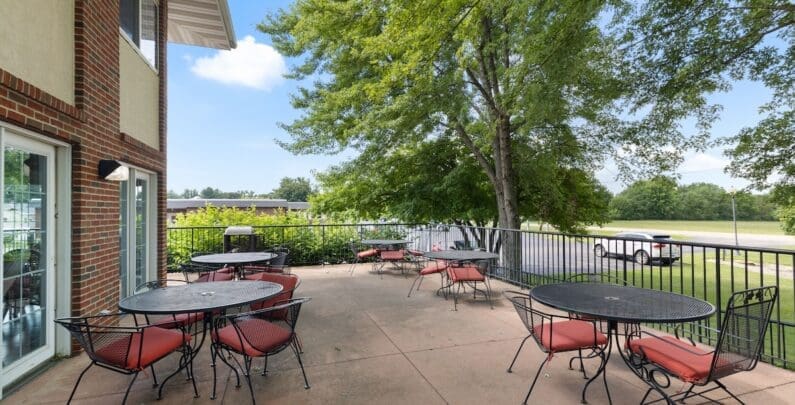
An entertainment room or community room that sees regular use tells you something about culture. A library that’s stocked and frequented tells you residents are engaged. A sunroom or outdoor patio that gets used means the building isn’t just somewhere people sleep.
Ask the tour guide which spaces get the most traffic. Better yet, notice which spaces show signs of being used. A game room with a well-worn pool table and cards on the table means something different than one that looks like it was just staged for your visit.
Spaces that encourage connection aren’t luxuries. For seniors, social engagement is directly tied to cognitive health and overall wellbeing. A community with a rich common life is a community where residents thrive.
Programming That’s Actually Run
Any senior living community will hand you an activities calendar. That’s table stakes. What you want to know is whether the programming on that calendar actually happens and whether residents actually attend.
Ask:
- How many residents typically show up to activities?
- Are these run by staff or volunteers?
- How long have the recurring activities been running?
Look for regulars, not just a schedule on the wall. If the same five residents show up to everything and the rest of the building stays in their rooms, that’s a social culture problem that no amount of bingo can fix.
The best communities have programming that’s grown organically over time. A coffee club that started small and became the highlight of residents’ weeks. An art club that residents asked for and that staff figured out how to run. These are signs of a community where programming is responsive to actual residents, not just written into a brochure.
When you tour The Meadows of Franklin Grove, you’re welcome to ask about attendance. We’d rather you see it for yourself.
Safety Features to Ask About Specifically
Safety features are easy to gloss over on a tour because they’re not visible in the same way a sunroom is. Ask directly.
Emergency call systems. Where are they? Is there one in every room? In bathrooms specifically, where falls most commonly happen? Does coverage extend to hallways and common areas?
Secure building entry. Can anyone walk in off the street, or is there a controlled entry process? For assisted living residents in particular, secure entry is meaningful.
24-hour staffing (for assisted living). Not just overnight staff — fully staffed, around the clock. Ask what the staffing ratio looks like at night and on weekends.
Response time. If a resident activates an emergency call, how quickly does staff respond? This is a hard question and some communities won’t give you a straight answer. The ones that do have invested in making sure the answer is good.
According to the CDC, falls are the leading cause of injury-related death among adults 65 and older. A community’s emergency response infrastructure is not a minor detail.
The Things You Can’t See on the Tour
The most important quality signals in senior living aren’t visible during a tour. You have to ask for them.
State inspection records. Every licensed assisted living community in Illinois is subject to annual inspections by the Illinois Department of Public Health. These inspections result in a public report. Ask to see the most recent one. Ask specifically whether there were any cited deficiencies.
Deficiencies are documented violations found during inspection. Most communities have some. A community with no cited deficiencies has passed every inspection with a clean record. That’s rare, and it matters. If a community won’t show you their inspection history, treat that as information.
Staff turnover. High turnover is a leading indicator of management and culture problems. Ask how long the current manager has been in the role. Ask whether the core care staff has been there a while. Residents form relationships with staff. Constant turnover erodes that.
How long has the community been operating? A community that’s been in the same location for decades has a track record. It has survived the test of time, of changing regulations, of residents coming and going. That’s not nothing.
What a Great Amenity List Actually Signals
Here’s what’s easy to miss: the amenities themselves are almost secondary.
What a well-maintained, well-used set of amenities signals is that the community takes quality of life seriously. It signals investment, intention, and follow-through. A game room no one uses tells you something about culture. A library that gets stocked and read tells you something different.
The best question you can ask on a tour isn’t “what do you have?” It’s “what do residents actually do with it?”
If the answers are specific, if staff can tell you which residents are regulars at which activities, if they can describe the cooking club’s last session or name the coffee club regulars, that’s a community where staff knows residents and programming is real.
If the answers are vague, if you’re shown spaces but not told stories, keep asking.
Frequently Asked Questions
Next Steps: Tour Independent Living in Franklin Grove
If you’re seeing signs that support would help, a tour is the fastest way to get real clarity—without pressure.
At The Meadows of Franklin Grove, families from across Lee & Ogle County come to see the apartments, learn what’s included, and talk through support needs and next steps.