

What Activities Are Available in Independent Living Communities?
One of the biggest fears people carry into this decision—whether you’re the one considering the move or the adult child helping a parent think it through—is the worry about losing something. The daily routine. The familiar faces. The sense of purpose that comes from having somewhere to be and someone to see.
It’s a fair concern. And it’s almost always wrong.
Independent living communities aren’t designed to replace the life you had. They’re designed to expand it. The social connections, the daily rhythm, the things that make a day feel full—all of that is built into how these communities work. At The Meadows of Franklin Grove, the programming and shared spaces are the whole point.
Here’s what a typical week actually looks like.
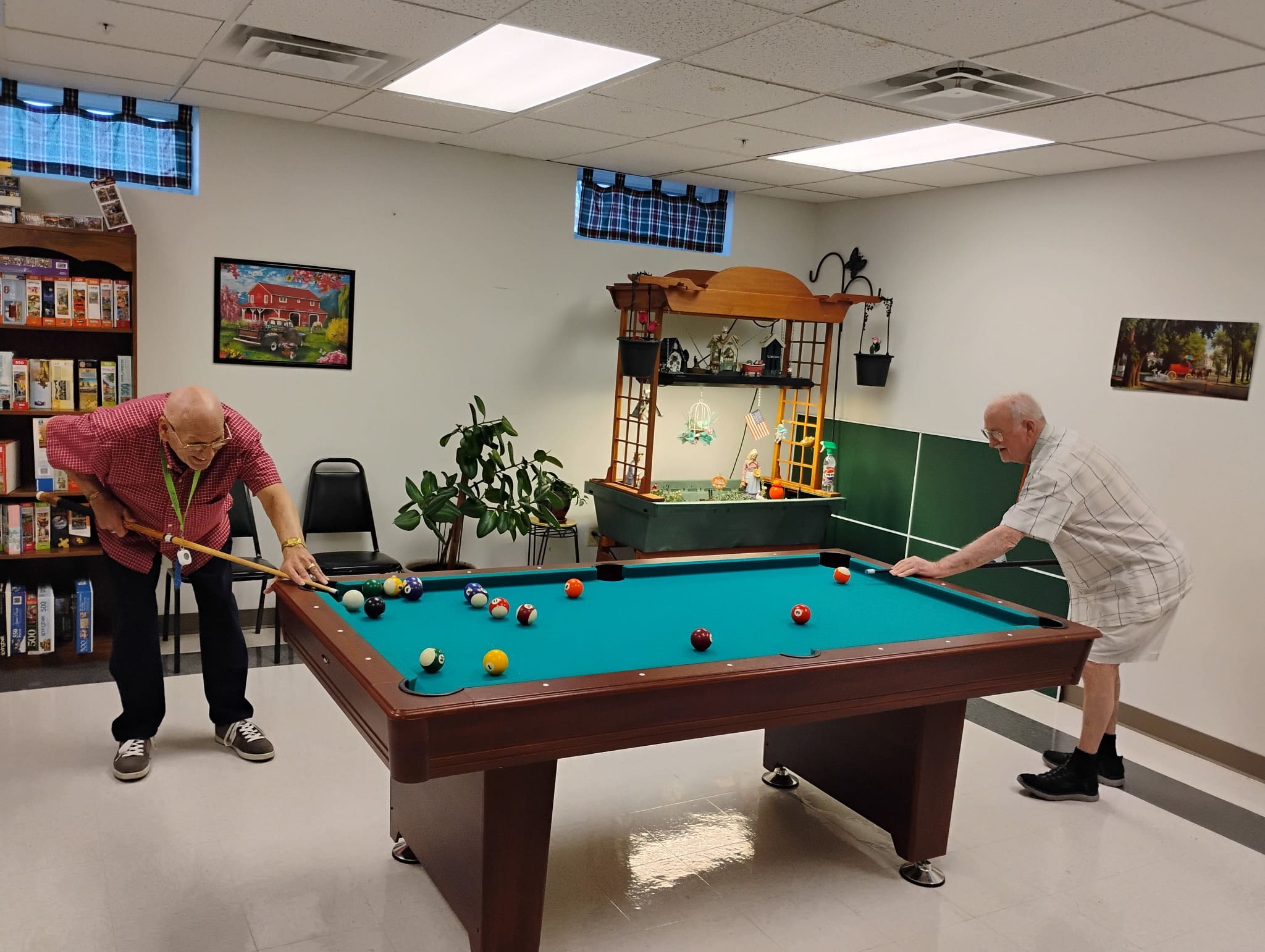
Social Activities: Where Friendships Actually Form
The loneliness that comes from living alone—particularly after retirement, or after losing a spouse—is one of the quietest and most underestimated health risks for older adults. The antidote isn’t grand gestures. It’s regularity. Small, repeated contact with the same people, week after week.
That’s exactly what social programming in independent living is designed to create.
At The Meadows, the coffee club is a perfect example of this in practice. It’s not complicated—it’s coffee and conversation, a few times a week, with the same group of neighbors. What starts as a polite introduction becomes a routine. The routine becomes friendship. It’s the kind of organic connection that’s genuinely hard to replicate when you’re living alone and your social calendar depends entirely on coordinating with busy adult children.
Bingo does something similar. It’s lighthearted, easy to join, and no experience is required. More importantly, it’s consistent. Same day, same faces, same easy laughter. For residents who are newer to the community, it’s one of the fastest ways to feel like they belong.
Ice cream socials pull the whole community together in the most low-pressure way possible. There’s no agenda—just a reason to sit together, share something sweet, and enjoy an afternoon. For families visiting on those days, it’s often the moment they realize their parent is genuinely happy here.

Physical and Wellness Activities: Staying Active Without Pressure
Staying physically active in later life matters more than most people realize—not for athletic performance, but for energy, sleep, balance, and mood. The challenge is finding ways to move that feel good rather than grueling, and that don’t come with the intimidation of a gym environment.
Chair yoga is one of the most popular wellness activities in independent living for exactly this reason. It’s accessible to almost every fitness level, it’s gentle on joints, and it delivers real benefits—improved flexibility, better breathing, reduced tension. For residents managing arthritis or recovering from a procedure, it keeps the body moving without risk. And because it’s a group class, it carries the same social benefit as any other activity: familiar faces, shared experience, something to look forward to.
Group walks serve the same dual purpose. Physically, a regular walking habit supports cardiovascular health, bone density, and cognitive function. Socially, there’s something about walking side by side that makes conversation happen naturally. A 20-minute walk with a neighbor covers more ground—literally and figuratively—than an hour sitting across a table.
Neither of these activities requires any particular fitness level to start. That’s the point. They’re designed to meet residents where they are.

Creative and Hobby Activities: Keeping the Mind Engaged
Cognitive engagement—using the brain for things that require focus, creativity, or problem-solving—is one of the most protective habits older adults can maintain. Independent living programming takes this seriously.
The art club at The Meadows gives residents a creative outlet that requires no prior experience. Whether you’ve painted for decades or never picked up a brush, there’s a seat for you. Art is one of those activities where the process matters more than the product—the focus, the decision-making, the quiet satisfaction of making something with your hands.
The cooking club brings a different kind of creativity, and it comes with the added pleasure of eating what you make. For residents who’ve spent a lifetime cooking for families, sharing that skill with neighbors is genuinely meaningful. For those who never cooked much, it’s a low-stakes way to try something new with people who are in the same position.
Puzzles are available as a more solitary option—a quiet hour in the library or game room, working through something that requires focus and patience. But puzzles in a community setting often turn communal on their own. Someone passes by, makes a suggestion, pulls up a chair. It’s one of those activities that adapts to however social you want to be that day.
Spiritual and Reflective Activities: Grounding the Everyday
For many older adults, faith and spiritual practice have been a constant through every chapter of life. Moving to a new home shouldn’t require giving that up.
The Meadows offers on-site church services, which matters more than it might seem at first. Transportation can be a genuine barrier for seniors who no longer drive, and relying on family members to get to Sunday services can feel like an imposition. Having worship available within the community removes that barrier entirely. Residents can maintain a practice that has anchored them for decades, on their own schedule, without asking anyone for a ride.
Beyond scheduled services, independent living communities like The Meadows include quieter spaces—a sunroom, a library—designed for reflection, reading, or simply sitting in peace. Not every hour needs to be programmed. The community is built to support both connection and solitude, depending on what the day calls for.
Why Activities Matter More Than Most People Expect
When families start researching independent living, activities are rarely the first thing they look at. They check safety features, floor plans, and location. Activities feel like a nice-to-have.
The research tells a different story.
According to the Centers for Disease Control and Prevention, social isolation in older adults is associated with a 50% increased risk of dementia, a 29% increased risk of heart disease, and a 32% increased risk of stroke. Loneliness—not just the absence of people, but the absence of meaningful connection—is a measurable health risk.
And here’s the thing that surprises most families: many seniors who are “fine” living alone at home are quietly isolated. They’re safe. They’re managing. But they may not have spoken to anyone outside their family in three or four days. There’s no coffee club waiting for them on Tuesday morning. No neighbor to walk with after breakfast. No reason to leave the house unless they have an errand.
Independent living in a community like The Meadows changes that equation entirely. The activities aren’t extras—they’re the infrastructure for a full life. Research published in the journal PLOS ONE found that older adults with strong social ties had significantly better cognitive performance over time compared to those who were socially isolated. The combination of physical activity, social engagement, and creative participation that independent living programming provides isn’t incidental to health—it is health.
The difference between a senior living independently at home and a senior living in a community like The Meadows isn’t just convenience. It’s the difference between a day that depends on external circumstances and a day that has structure, warmth, and people built into it.
For the adult child reading this: that’s the relief you’re looking for. Not just that your parent is safe—but that they’re genuinely occupied, connected, and looked forward to. That someone in the coffee club will notice if they don’t show up one morning.
Come See a Week for Yourself
Reading a list of activities only tells part of the story. The part that actually matters—the way residents laugh at bingo, the conversation that carries on long after the group walk ends, the smell of whatever the cooking club made this week—you have to see that in person.
We’d love to have you visit The Meadows and experience what a typical week actually looks and feels like. Take a look at what a week at The Meadows includes, then reach out to arrange a tour. Come on a day when something’s on the calendar. See where your parent might end up sitting most mornings.
This is their next chapter. It should feel like one worth looking forward to.
Frequently Asked Questions
Next Steps: Tour Independent Living in Franklin Grove
If you’re seeing signs that support would help, a tour is the fastest way to get real clarity—without pressure.
At The Meadows of Franklin Grove, families from across Lee & Ogle County come to see the apartments, learn what’s included, and talk through support needs and next steps.